Voice of Rhythm with Sandip SoparrkarAshta Bhava, Ashta Nritya
Total Views |


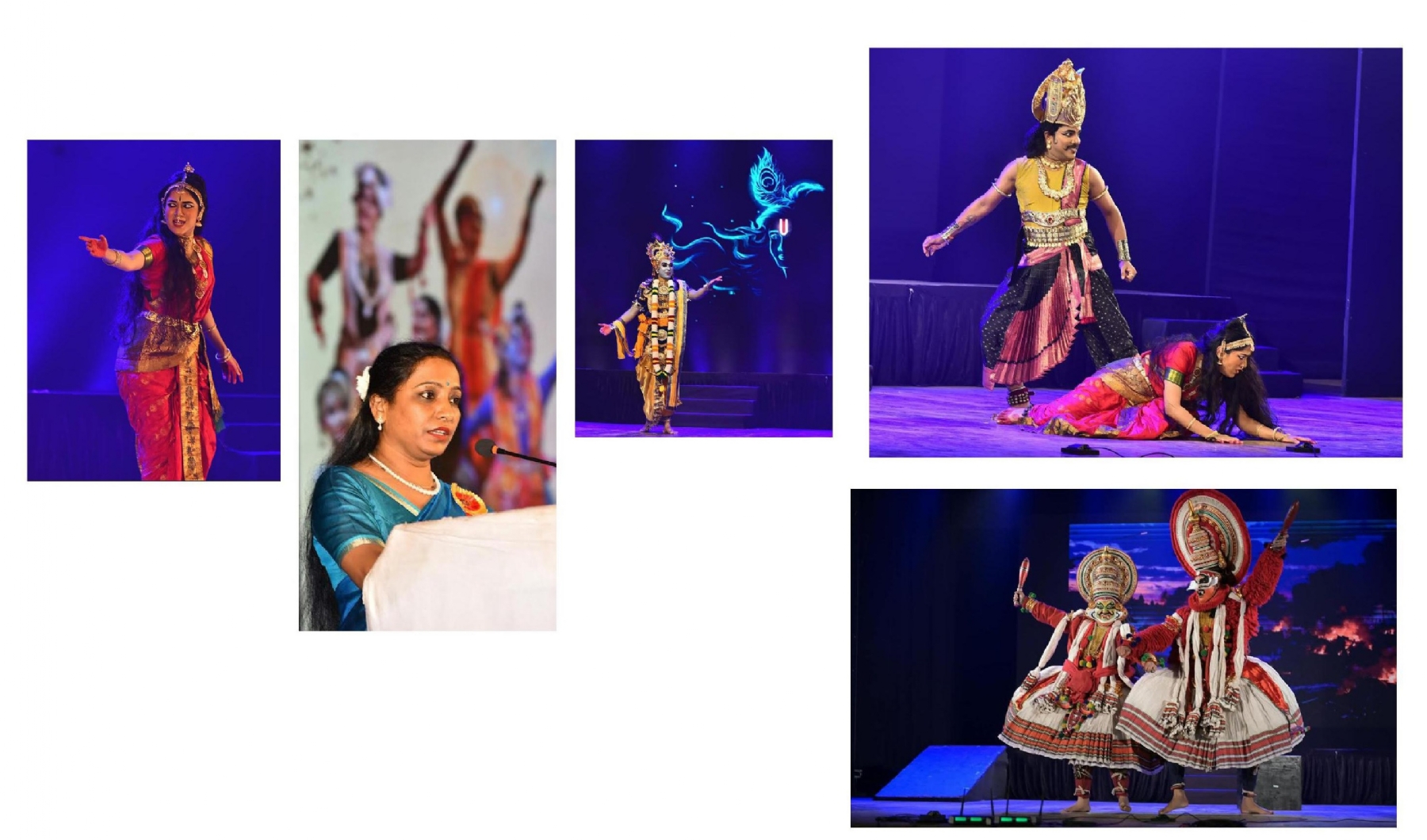
Indian classical dance is a magnificent expression of the country’s cultural heritage, yet it often struggles to reach audiences beyond dedicated enthusiasts. Seeking to bridge this gap, Gayatri Mishra, Director of the Pune Art and Culture Foundation, conceptualised Ashta Bhava, Ashta Nritya – Mahabharata, an ambitious production bringing together all eight recognised Indian classical dance forms through the timeless stories of the Mahabharata. With over 50 artists participating, the production celebrates the spirit of Ek Bharat – Shreshtha Bharat while making classical dance accessible to contemporary audiences. In an exclusive conversation, Gayatri Mishra discusses the inspiration, creative journey, challenges and future aspirations behind this unique presentation. Excerpts from the interview:
What inspired you to conceptualise Ashta Bhava, Ashta Nritya – Mahabharata?
The idea emerged from a simple observation. Whenever I attended classical dance performances with my daughter, I noticed that audiences largely comprised family members, friends and acquaintances of the performers. Despite the extraordinary richness of Indian classical dance, its reach remained limited.
I began wondering how we could introduce these beautiful traditions to wider audiences without compromising their authenticity. During a discussion, my husband, Sandip Kolhatkar, suggested the Mahabharata as a connecting thread because its stories resonate across generations.
After five months of research, we developed a concept connecting eight principal Bhavas from the Natya Shastra with eight episodes from the Mahabharata, each presented through a different classical dance form. We also introduced a Sutradhar inspired by Assam’s Ankiya Nat tradition to narrate each episode, helping audiences understand the performances.
Why did you decide to incorporate all eight Indian classical dance forms?
India’s greatest strength lies in its diversity. Bharatanatyam, Kathak, Kathakali, Kuchipudi, Odissi, Manipuri, Mohiniyattam and Sattriya have distinct identities, techniques, costumes and musical traditions, yet share a cultural foundation.
Bringing them together was our way of celebrating Ek Bharat – Shreshtha Bharat. Each dance form interprets human emotions differently, but the Mahabharata provides a common narrative. The production demonstrates that despite regional differences, Indian classical traditions speak a universal artistic language.
Who were the principal artists and creative collaborators involved?
This production was possible because of extraordinary collaboration. I developed the concept, content and script, while my husband and I organised it through the Pune Art and Culture Foundation. Dr Devika Borthakur provided artistic and academic leadership.
The participating gurus included Arundhati Patwardhan for Bharatanatyam, Leena Ketkar for Kathak, Renjish Nair for Kathakali, Dr Vasanth Kiran Rayasam and Gayatri Ambekar for Kuchipudi, Rasika Gumaste for Odissi, Manjula Nambiar for Mohiniyattam and Dr Devika Borthakur for Sattriya. Sruti Performing Troupe from Kolkata represented Manipuri.
Each guru brought dedicated dancers and distinctive artistic expertise. Amlan Jyoti Das composed and sang the theme song, joined by vocalist Jahnabi Mishra. Vinod Kumar Ordu and Gaurav Srivastava contributed voice-overs, while our technical and management teams ensured seamless execution.
Tell us about the Pune Art and Culture Foundation and its activities.
Our foundation is a non-profit organisation committed to promoting art, culture and literature. As descendants of celebrated playwright and humorist Shripad Krishna Kolhatkar, we feel responsible for carrying forward his cultural legacy.
Our daughter’s involvement in Sattriya helped us understand the tremendous discipline and dedication required of classical dancers. We wanted to create opportunities offering artists visibility, recognition and financial encouragement.
We have collaborated with the Pune Municipal Corporation on cultural programmes during River Festivals, World Environment Day and other occasions. We have also organised literary initiatives, including a celebration of renowned author Ruskin Bond’s 92nd birthday.
With Western dance forms becoming increasingly popular, how can such productions encourage appreciation of Indian classical traditions?
I do not believe Western and Indian dance forms need to compete. Every tradition has its own beauty. However, younger audiences often find classical Indian dance difficult to understand because they are unfamiliar with its gestures, expressions and symbolism.
Our production addresses this through storytelling. When audiences recognise a Mahabharata episode, they can connect emotionally with the characters and understand the Bhavas being portrayed.
They simultaneously discover the distinctive beauty of eight classical forms. Such productions can become meaningful educational experiences, especially for younger generations.
What are your future plans for this production?
The inaugural Pune performance received an overwhelmingly encouraging response, with audiences requesting repeat shows. We now envision taking this production across India, including major cities and smaller cultural centres.
Our plans include public performances, educational workshops on the Natya Shastra and special presentations for students.
Bringing together more than 50 artists from different regions involves considerable logistical and financial challenges. We hope to receive support from the Ministry of Culture, Sangeet Natak Akademi and other cultural institutions.
Our larger ambition is to make this production a national celebration of India's artistic unity.
Finally, whom would you like to acknowledge for supporting this ambitious production?
We are deeply grateful to Pune Municipal Commissioner Shri Naval Kishore Ram, Mayor Mrs Manjusha Deepak Nagpure, Deputy Municipal Commissioner Dr Santosh Tengale and the Balgandharv Rangmandir team for their encouragement and cooperation.
Special gratitude goes to Dr Devika Borthakur for her mentorship, Renjish Nair for technical expertise, and every participating guru, dancer, musician and backstage collaborator.
I would also like to acknowledge project contributors Yosha Roy and Avanti Gawde, and anchors Yogesh Supekar and Shivani Vyas.
Ultimately, Ashta Bhava, Ashta Nritya – Mahabharata belongs to every artist who helped transform our vision into reality. Our greatest reward is seeing audiences discover the beauty of India's classical dance heritage.