The Woman Who Made Lavani Speak - Shakuntala NagarkarDance Stage – Sandip Soparrkar
Total Views |


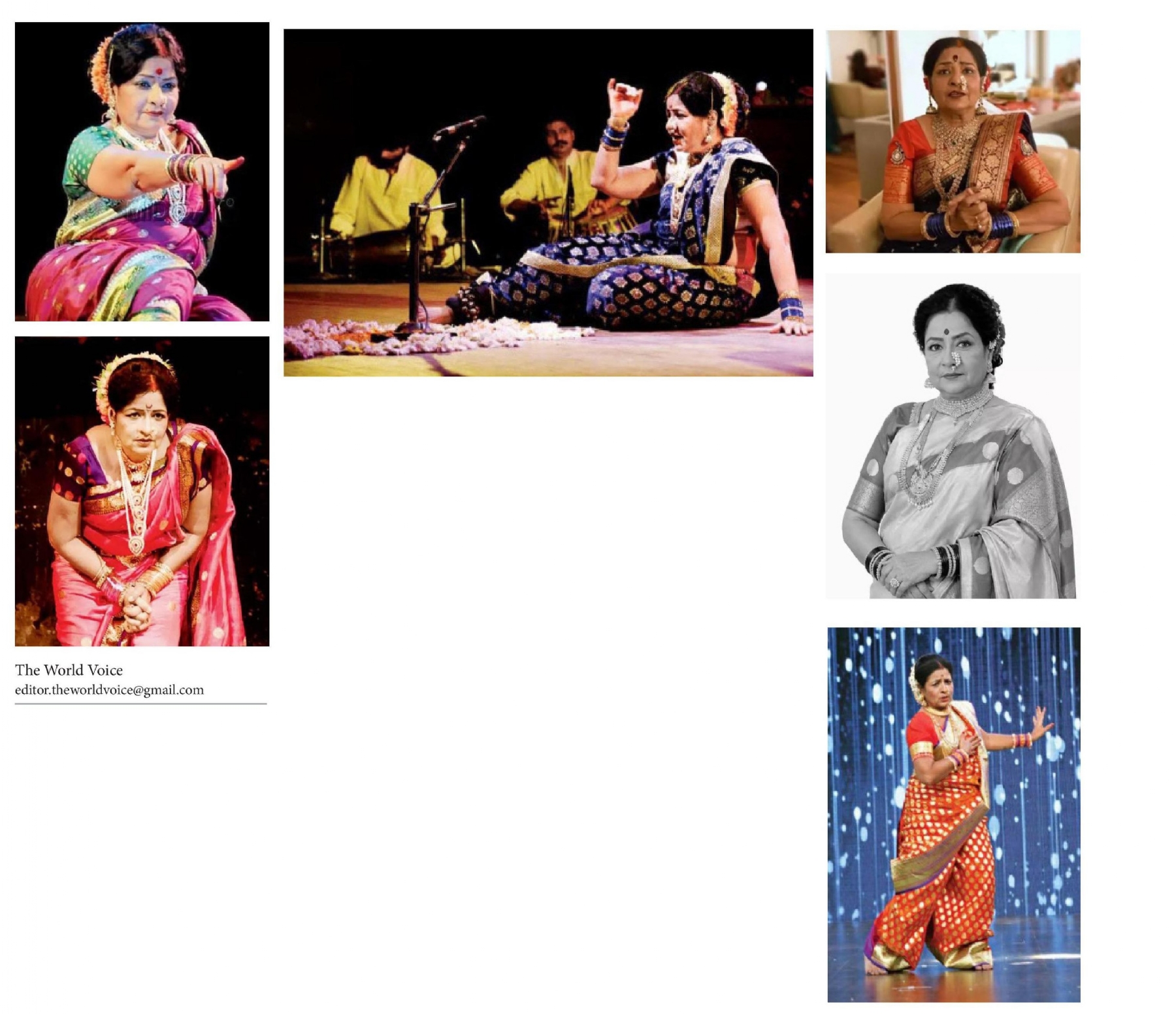
Some artists perform an art form. Some artists preserve it. And then there are those rare artists who become inseparable from the very identity of the art they serve. Shakuntala Nagarkar was one such extraordinary artiste.
With her passing on 22 September 2026, Maharashtra has lost one of its most powerful and distinctive voices in Lavani. She was 66. For more than five decades, Shakuntalabai, as she was lovingly known, lived, breathed and championed Lavani, leaving behind a legacy that will continue to inspire dancers, theatre practitioners and lovers of Indian folk traditions.
To speak of Shakuntala Nagarkar merely as a Lavani dancer would be to underestimate the breadth of her artistry. She was a complete performer — a dancer, actor, singer and storyteller whose eyes could speak as eloquently as her feet and whose expressions could transform a simple gesture into an entire narrative.
Born into a family connected with the Lavani tradition, she entered the performing arts at a remarkably young age. Her mother, Chhabubai Nagarkar, was herself a well-known Lavani artiste. Shakuntalabai inherited not merely a profession but a cultural inheritance. Yet she did not simply repeat what she had received. She developed it, questioned it, enriched it and carried it into new spaces.
Her journey blossomed in Mumbai’s Girangaon, particularly through the legendary Hanuman Theatre in Lalbaug, where her Lavani performances established her as a formidable stage presence. Over the decades, audiences came to recognise her for her powerful voice, expressive eyes, impeccable timing, infectious energy and extraordinary command over the nuances of performance.
What made Shakuntalabai particularly remarkable was her ability to combine the sensuality and playfulness traditionally associated with Lavani with humour, intelligence and dramatic depth. She could tease an audience, make them laugh, challenge them and suddenly move them with a moment of profound vulnerability.
Her artistry demonstrated that Lavani was never merely about glamour or physical movement. It was theatre. It was poetry. It was music. It was storytelling. It was social commentary. And above all, it was an expression of the lives, emotions and experiences of women.
She also understood the importance of artistic evolution. Rather than allowing Lavani to remain confined to its traditional performance spaces, she participated in newer theatrical experiments and projects such as Lavani Ke Rang and Love and Lavani, helping introduce the form to audiences who may otherwise never have encountered its richness.
Her association with Lavani Ke Rang was particularly significant. In 2023, she received the Mahindra Excellence in Theatre Award for Best Actor in a Lead Role (Female) for her performance in the production. The recognition was important because it acknowledged not simply her mastery of Lavani but her stature as a theatre performer.
Shakuntalabai was also a recipient of the Sangeet Natak Akademi Award, one of India’s foremost national recognitions for performing artists. Her contribution was not restricted to the stage. She and theatre director Bhushan Korgaonkar took Lavani into universities and educational institutions, conducting workshops and introducing younger generations to the form.
That aspect of her life is perhaps among her greatest gifts to the future: she did not want Lavani simply remembered; she wanted it understood.
She also brought an unusual openness to her performances. Her command over audience interaction was legendary. She could establish an intimate connection with hundreds of people in a hall, making each person feel that the performance was happening directly for them. Her comic timing, spontaneity and ability to improvise were repeatedly admired by fellow theatre practitioners. Actor Geetanjali Kulkarni described her as possessing tremendous stage presence, spontaneity and an irrepressible spirit and energy.
Perhaps even more remarkable was the dignity with which she carried an art form that has historically occupied a complicated place in society. Shakuntalabai never apologised for Lavani. She stood proudly within its tradition while demonstrating that folk art deserves the same seriousness, respect and artistic consideration as any classical form.
She also studied classical dance under Kathak guru Vasantrao Ghatge, adding another dimension to her movement vocabulary and strengthening the sophistication of her traditional Lavani presentation.
Her later years revealed another dimension of her character. Even after being diagnosed with cancer, she continued performing, travelling, conducting workshops and sharing her knowledge. Her final public performance was reportedly in April 2025.
That is perhaps the most fitting image with which to remember Shakuntalabai Nagarkar: the ghungroos still tied, the eyes still expressive, the body still responding to rhythm, and the artist still communicating with her audience.
Every generation has a few artists who become custodians of memory. Shakuntala Nagarkar was one of them.
She preserved the fragrance of the Sangeet Bari, carried its traditions into contemporary theatre and opened doors for audiences to discover the extraordinary sophistication of Lavani. She proved that folk does not mean lesser, traditional does not mean outdated, and sensuality does not mean superficiality.
Her passing leaves a silence, but it is not an empty silence. It is filled with the beat of the dholki, the resonance of her voice, the sparkle of her eyes, the rhythm of her ghungroos and the countless memories she created on stage.
Shakuntalabai Nagarkar may have taken her final bow, but Lavani will continue to dance with her spirit. Her greatest tribute will not be merely to remember her name. It will be to ensure that the art she loved is respected, studied, performed and carried forward with the same courage, dignity and passion that she brought to it.
To Shakuntalabai — the ghungroos may have fallen silent, but the rhythm you gave to Lavani will never stop.