A Visit By US Congress Delegation Comes Amid Questions Over 'Future Trajectory of Ties'
Total Views |


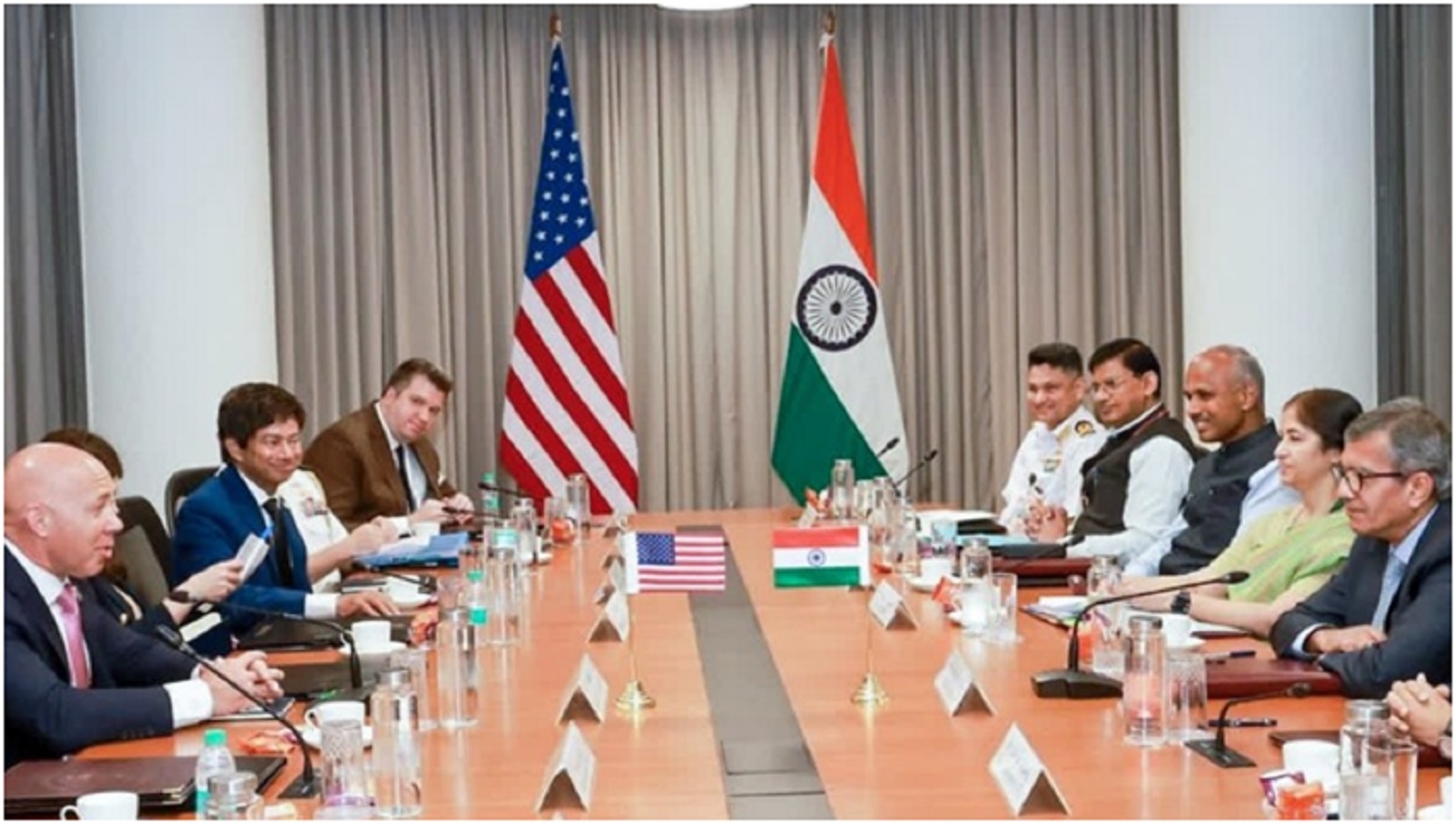
New Delhi: The visit of a bipartisan delegation from the United States House of Representatives underscored the continuing engagement between India and the US with discussions focused on the "future trajectory of ties."
However, this visit comes at a time when there is considerable uncertainty over the relationship. The US is redrawing its relationship with China on one hand and Pakistan on the other, even as the threat of additional tariffs hangs over India.
This raises the question of whether this is a short-term strain in India-US ties or whether the core basis that once underscored the US' relationship with India as a bulwark against China is transforming.
Defence cooperation, however, is one area of bilateral ties that remains strong amid all this uncertainty. The delegation led by Representative Brian Mast, Chairman of the House Foreign Affairs Committee, met Defence Secretary Rajesh Kumar Singh on Monday and discussed the evolving comprehensive strategic partnership with "special emphasis on defence industrial and technological cooperation," said the Defence Ministry.
The US is keen to boost its domestic industrial base and India, which is among the world's largest buyers of arms, is looking for technology and joint production.
But if defence ties are strengthening, they are also not completely immune from the greatest strain in ties: trade. Under Trump, tariffs and sanctions have become the preferred US tool for geopolitical pressure, with rivals and friends of the US alike facing tariff threats and hikes.
On Sunday, the House of Representatives delegation met with Foreign Secretary Vikram Misri. During this meeting, discussions included the Sanctioning Russia and Iran Act (SRIA) of 2026, which gives the US President the authority to impose up to a 100 per cent tariff on buyers of Russian oil.
Mast, who headed the delegation to India, and most of his five member delegation supported the sanctions law, which passed by a bipartisan vote of 262 to 159 in the House of Representatives. Trump signed the bill into law on September 18, 2026.
In this backdrop, Ministry of External Affairs spokesperson Randhir Jaiswal noted that the bill had come up for discussion during the meeting between Misri and the US delegation. "Discussions covered the entire gamut of India–U.S. relations, including the recently enacted SRIA legislation ...," he said in a statement on X.
India's relationship with Russia has been energised due to its import of Russian oil. But the same issue that energised India-Russia ties has also become an area of tension between India and the US. US Congress members have continued to criticise India's purchase of Russian oil.
The new law comes at a particularly inopportune moment for India which has managed to stave off the uncertainty caused by the Iran conflict by increasing oil purchases from Russia to power its fast growing economy.
As a result of the sanctions law, Indian refiners are reportedly bracing for potential disruption of supply of Russian oil due to the threat of US sanctions but also because China is increasing its purchase of Russian oil. India's crude oil imports from Russia hit a high in June, with volumes reaching a record 2.6 million barrels per day.
The uncertainty over energy security is one that India can ill afford. For India, the second-largest oil importer after China, any disruption to oil imports immediately challenges the country's energy security.
Jaiswal has repeatedly underlined that "energy sourcing" is based on India's national interest. "We have said that meeting the energy requirements of our 1.4 billion people is an imperative that we have to follow. And we continue to buy energy from diversified sources,” Jaiswal said in a briefing on September 18.
While India has increased oil purchases from Venezuela—where the US took control of vast amounts of its oil following a military intervention in January 2026—the pressure from Washington on New Delhi's sourcing of Russian oil remains an area of strain in ties.
Analysts noted that the visit of the US delegation would have also been aimed at gauging the political temperature in India.
"There is a strategy in this visit and they would like to see what has happened after BRICS and the Russian sanction bill. Both came back-to-back," said Biswajit Dhar, a trade expert.