2 in 3 Urban Indians Use Financial Products Through Payment Apps, Report Finds
Total Views |


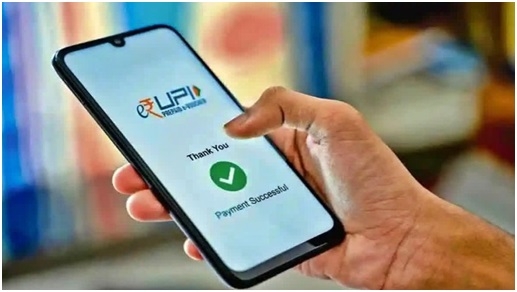
New Delhi: A 2/3rd of urban Indians have used at least one financial product through their primary payment application, according to the How Urban India Pays Report 2026 released by Pahlé India Foundation in association with Amazon Pay. More than half (52%) of consumers prefer a single app for payments, investments, insurance and credit, the report highlighted.
The report stated that despite digital payments skyrocketing in recent years, a distinct divide remains between payment confidence and credit adoption. The report highlighted that awareness of digital credit stands at 88 per cent, but actual usage remains low at 31 per cent.
The study has released the figures based on the Digital Credit Inclusion Index (DCII) 2026. India secured an overall score of 55.85 out of 100, placing the nation in the "Emerging & Served" category. Among its three core pillars, Access scores 61.24, Adoption reaches 57.17, and Impact lags at 49.16.
The How Urban India Pays Report 2026 attributes the shortfall in impact directly to a lack of trust. Users rate payment applications 4.11 out of 5 for security and 3.98 for payment services, however, their trust slumps to 3.10 when credit facilities are involved. Notably, 51.5 per cent of respondents indicate a willingness to borrow through their application if fraud protection were guaranteed, while only 16.7 per cent remain unwilling to do so.
UPI leads in five of six spending categories
71% use it for ecommerce
54% for eating out and travel
53% each for fuel and medical expenses
49% for groceries.
Cash holds on mainly for rent, where it accounts for 49% of payments.
While noting that the digital payments expansion represents a critical development milestone, Rajiv Kumar, Chairman of Pahlé India Foundation said, "In less than a decade, UPI has moved from novelty to reflex, and urban India now pays digitally as a matter of habit.”
"Having built this foundation of trust-based efficiency at scale, India is now ready for its next leap: extending the confidence earned in payments to borrowing, saving and investing," he added.
Kumar, the chairman of Pahlé India Foundation, advocated for transparent disclosure, robust cybersecurity, and underwriting systems for informal incomes as these help digital finance reach more citizens and contribute toward the Viksit Bharat at 2047 objective.
Tier-2 cities outpace metropolitan centres
Tier-2 cities have surpassed metropolitan centres as the primary engine for credit uptake. Tier-2 regions lead in Buy Now Pay Later (BNPL) at 60 per cent and credit applications at 41 per cent, recording a DCII score of 58.64, which is higher than Tier-1 at 53.10 and Tier-3 at 55.77.
Vikas Bansal, Chief Executive Officer of Amazon Pay India, pointed out that urban consumers rely on digital credit to manage routine expenses.
"Consumers are increasingly turning to BNPL and EMI options not just for big-ticket purchases, but as practical tools to spread costs, stay within budget and make aspirational purchases more accessible," Bansal said.
"At Amazon Pay, we see this shift first-hand, with 75% of our customers in Tier-2 and Tier-3 cities," he added