World Economy In 2025: Tariff War, Divergent Growth, Volatile Energy Prices Redrew Trade Maps
Total Views |


The world economy in 2025 experienced a noticeable decline over the previous year. Although the exact numbers differed from one agency to another, the leading worldwide organisations all agreed that the growth rate had slowed down.
A comparison of the growth rates shows that the IMF-projected global GDP growth in October declined from 3.3% in 2024 to 3.2% in 2025. According to the Organisation for Economic Co-operation and Development (OECD) forecast in June, the growth rate slumped from 3.3% in 2024 to 2.9% in 2025.
The slowdown rate was largely attributed to trade barriers. The UN’s updated November outlook showed a subdued 2.5% growth in 2025, compared to 2.8% in 2024. Thus, all major global institutions agreed that growth has declined.
What Caused The Economic Slowdown
A host of factors drove the 2025 slowdown. They included:
Trade barriers: The year saw a significant rise in tariffs and retaliatory measures, which disrupted global supply chains and increased production costs.
Policy uncertainty: The slowdown was caused by heightened geopolitical tensions, and fluctuating industrial policies contributed to a decline in business confidence and investment.
Regional divergence: The world's big economies, such as the US and China, saw a decline in growth. The US growth plummeted to roughly 1.6%-2.0% due to tariff-induced inflation and tighter labour markets. China also saw a moderate growth of 4.5%–4.9% amid domestic demand issues and trade frictions.
Financial volatility: The market conditions increasingly impacted trade as much as real economic activity, with nearly 90% of global trade depending on sensitive credit lines.
Tariff Wars And Trade Fragmentation
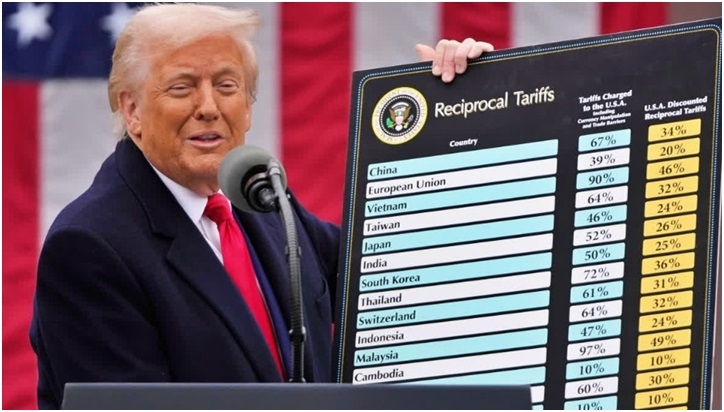
In 2025, the United States imposed 25% tariffs on nearly all the goods coming from Canada, China, Mexico, Euro zone and other important partners. As a result, the trade tensions worsened significantly, leading to a new economic crisis. As a counteraction, retaliatory tariffs were placed by countries.
The tariffs raised production costs, pushed inflation (especially in the US), and added to policy uncertainty, all helping to depress global trade volumes and investment. Post-Trump tariffs, businesses made sure to move their suppliers elsewhere so that more payments aren't born out of the cost and tariffs imposed by the US. A lot of businesses made a shift to Vietnam, India, and Mexico, which in turn sped up the formation of regional trades and the development of regional value chains.
Development Trajectories Diverging
The growth of advanced economies since 2022 slowed considerably to an estimated 1.6% in 2025 owing to trade disturbances and tighter financial conditions. The US slowed down, while the Euro area also saw moderate growth.
Emerging markets as a group were more resilient, growing about 4.2 per cent on average. India stood out as a particularly bright spot, as strong domestic demand insulated against external headwinds, leading to 6.6% growth during the current fiscal.