Hamas Launches Gaza Crackdown As Trump Vows To Disarm Group


The Israeli military said the remains of four more hostages held in Gaza
had been brought into Israel, a day after Hamas handed over the bodies of four
other captives and released the last 20 surviving hostages. Hamas published a
video on its official channel showing the street execution of eight blindfolded
and kneeling suspects, branding them "collaborators and outlaws".
The footage, apparently from Monday evening, emerged as armed clashes
were underway between Hamas's various security units and armed Palestinian
clans in parts of the territory, on the fifth day of a US-brokered truce
between Hamas and Israel. In the north of the territory, as Israeli forces
withdrew from Gaza City, the Hamas government's black-masked armed police have
resumed street patrols.
When busloads of prisoners freed from Israeli jails arrived in Gaza on
Monday, fighters from Hamas's Ezzedine al-Qassam Brigades provided crowd
control. Meanwhile, a Hamas security unit has been conducting operations
against armed clans and gangs, some alleged to have Israeli backing.
"Intense clashes broke out -- and are still ongoing at the moment -- as
part of efforts to eliminate collaborators," said witness Yahya, who asked
not to be named in full for fear of retribution.
Another Gaza resident, Mohammed, told AFP: "For long hours this
morning there were heavy clashes between Hamas security forces and members of
the Hilles family." The fighting was in Shujaiya, in the east of Gaza
City, close to the so-called Yellow Line, behind which Israeli units still hold
roughly half of Gaza.
"We heard intense gunfire and explosions, and the security forces
arrested some of them. We support this," Mohammed said, also asking not to
be named in full. A Palestinian security source in Gaza told AFP that Hamas's
security body, a recently established unit whose name translates as
"Deterrence Force", was conducting "ongoing field operations to
ensure security and stability". "Our message is clear: There will be
no place for outlaws or those who threaten the security of citizens," he
said.
Hamas has, since it crushed rival Fatah in armed clashes, been the
dominant Palestinian faction in Gaza since 2007. Israel insists Hamas can have
no role in a future Gaza government, must hand back the remains of all deceased
hostages and eventually disarm. US President Donald Trump's Gaza plan says that
Hamas members who agree to "decommission their weapons" will be given
amnesty.
"If they don't disarm, we will disarm them," Trump told
reporters at the White House a day after visiting the Middle East to celebrate
the Gaza ceasefire. "And it will happen quickly and perhaps
violently." The 20-point document, endorsed Monday by world powers at a
Trump-chaired summit in Egypt, says Gaza will be demilitarised and Hamas have
no leadership role.
But for many Palestinians rebuilding their homes and lives Tuesday amid
Gaza's rubble, the sight of the militants was reassuring. "After the war
ended and the police spread out in the streets, we started to feel safe,"
said 34-year-old Abu Fadi Al-Banna, in Deir al-Balah, central Gaza. Hamdiya
Shammiya, 40, who was driven from her home in northern Gaza by the fighting to
seek shelter in the southern city Khan Yunis, agreed.
"Thank God the war is finally over. We've started to breathe a
little," she said. While Palestinians sought stability, Israeli families
stepped up pressure for the return of the remains of 24 deceased hostages still
held in Gaza. Following the Trump-brokered ceasefire last Friday, 20 surviving
hostages returned to scenes of rejoicing, while the remains of four deceased
were also handed back.
But the deal called for the return of all the missing -- living and dead
-- and hostage families and Israeli leaders have demanded Hamas comply. On
Monday, Hamas handed over the remains of four hostages, just hours after
releasing the last 20 living captives. The military named two of the returned
victims as Guy Iluz, an Israeli national, and Bipin Joshi, an agriculture
student from Nepal.
Later, the Families Forum, which campaigns for the release of the
hostages, identified the two others as Yossi Sharabi and Daniel Peretz, an
officer in the Israeli army. "Now we can finally bring closure to the
nightmare that began over two years ago, and give Yossi the dignified and
loving burial he deserves," his wife Nira Sharabi was quoted as saying by
the forum.
In Tel Aviv, people gathered to celebrate the liberation of the living hostages
and demand the return of the others' remains. "I don't know what to feel
because I didn't think (we'd) reach this day where all the living hostages will
return," demonstrator Barak Cohen told AFP. "But still I see great
difficulties in returning the remaining dead hostages," he said.
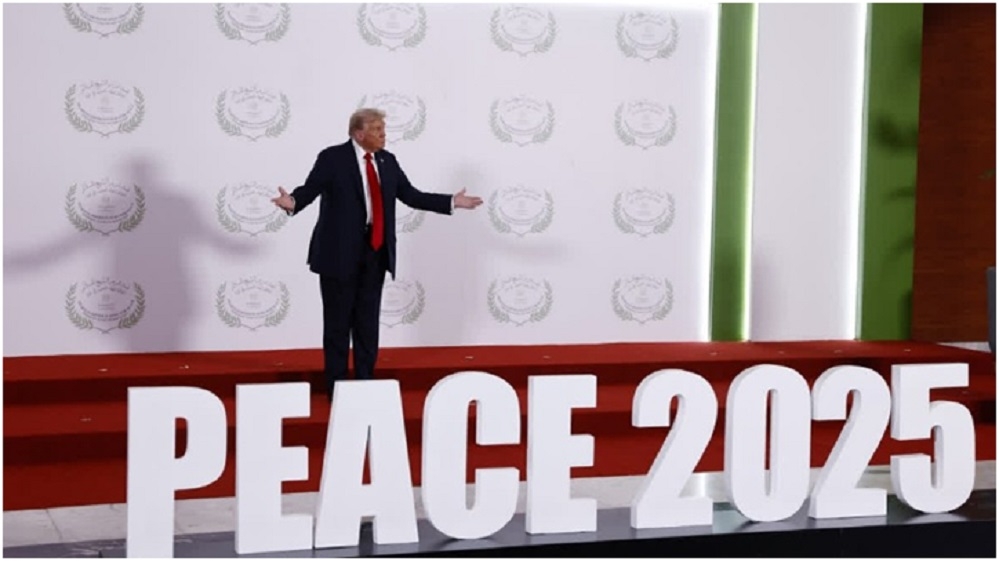
On Monday, Trump was in Jerusalem where he sought to celebrate, alongside
Israeli Prime Minister Benjamin Netanyahu, the truce and Gaza plan as a win.
Then, in Egypt, he joined regional leaders in signing a declaration meant to
cement the ceasefire.